
Disclosure: This post contains affiliate links. If you click through and make a purchase, I may receive a commission at no additional cost to you. I only recommend what I use to get real results.
Stop obsessing over that number on your scale — it doesn’t tell the full story. Many people see a “healthy” weight but still carry soft, stubborn fat and low muscle tone. That mismatch between the number and how your clothes or mirror look is often the hallmark of being skinny fat.
Quick definition: “skinny fat” describes a body that appears slim in clothes but has a higher body fat percentage and relatively low muscle mass when measured — a composition issue, not just a weight problem. This guide (the Skinny Fat Survival Guide) shows you how to measure body composition properly and then change it.
Why this happens: prolonged low-calorie dieting and endless steady-state cardio can reduce muscle mass in some people, which lowers resting energy expenditure and makes it easier to regain fat — the very thing that creates a skinny fat body. You’ll learn practical, evidence-backed steps to protect and build muscle, improve metabolic health, and shift where your body stores fat.
What you’ll get: a simple three-step plan (resistance training, targeted protein intake, and NEAT + lifestyle tweaks) plus immediate actions you can take today to start changing your composition — not just your weight.
Take the quick 30-second quiz to get a personalized snapshot of your current composition and a clear starting plan you can act on right away.
The Data Deep Dive: Why Your Body Composition Matters More Than Weight
I rarely begin with the scale when assessing a client — I start with a body composition scan (InBody, DEXA, or similar). Pounds alone hide whether weight is coming from muscle or fat; composition metrics tell the real story and change how we approach fat loss, muscle gain, and long-term health.
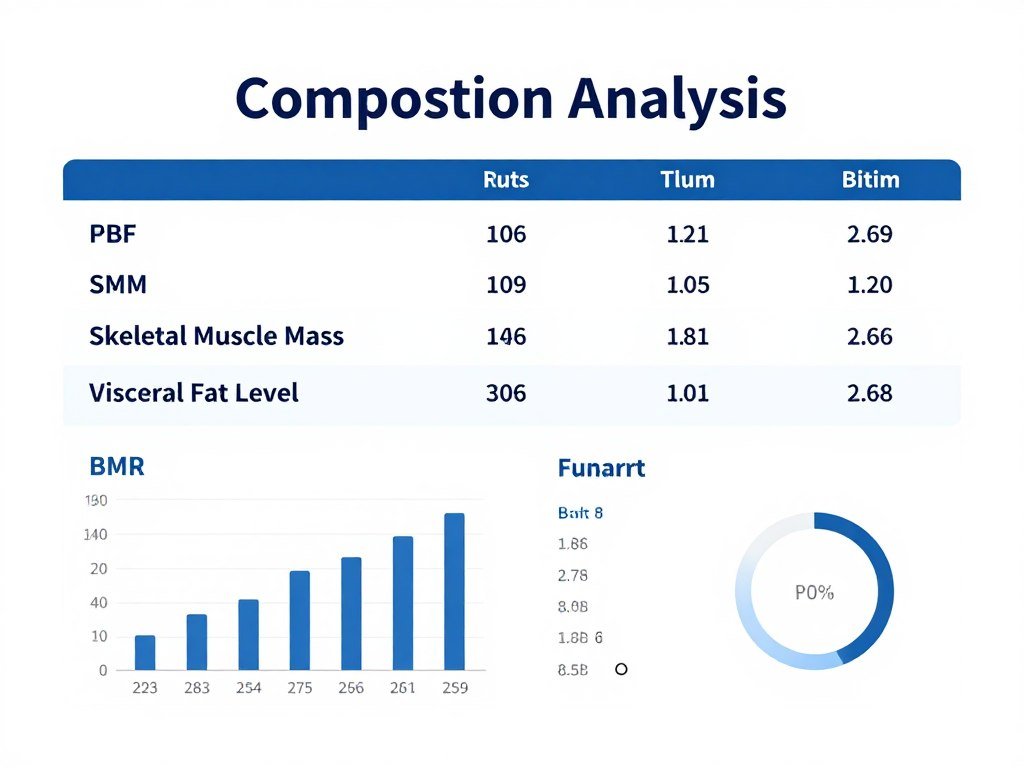
An InBody (or similar device) reports key composition values: PBF (percent body fat), SMM (skeletal muscle mass), visceral fat estimates, and segmental lean mass for each limb. Those metrics reveal whether you have a relatively high percentage of body fat combined with low muscle — the signature of a skinny fat body — and help explain why two people with the same weight can have very different metabolisms and health risks.
How to get an accurate body composition scan (DEXA vs. InBody)
DEXA is the clinical gold standard for measuring fat and lean mass (including visceral fat) but is less available and typically costs more. InBody and similar bioelectrical impedance devices give fast, useful segmental data for tracking trends. Important: be consistent with timing (same hydration, same time of day, avoid heavy exercise right before) to reduce measurement noise. For a practical comparison, see this resource: DEXA vs. InBody explained.
Quick guidance on which to choose:
- Who needs DEXA: athletes, clinical cases, or anyone wanting the most precise single-measurement baseline.
- Who should use InBody or consumer scans: people tracking monthly trends and segmental changes — great for monitoring progress if you stay consistent.
- Cost & access: DEXA sessions often cost more and require appointments at clinics or imaging centers; InBody scans are commonly available at gyms and wellness clinics.
PBF (Body Fat Percentage): Finding Your Sweet Spot
Percent body fat (PBF) is one of the clearest indicators of composition. For many recreationally active women, a general healthy range is roughly 20–30% body fat — a range that commonly supports hormonal health, steady energy, and recovery. Going much lower can disrupt menstrual cycles or recovery in some women, so prioritize sustainable function over chasing a very low number.
How to interpret PBF by context:
- Young recreational women: ~20–25% is a common, healthy range.
- Athletes/competitive individuals: ~14–20% may be seen in certain sports but often comes with trade-offs for overall health.
- Older adults: slightly higher PBF norms are typical; the focus should be on preserving muscle mass.
Use these ranges as a guide, not a strict rule. If very low body fat seems to be affecting health or sleep, consult a healthcare provider and consider a DEXA or clinical evaluation for clarity.
SMM (Skeletal Muscle Mass): Your Metabolic Engine
Skeletal muscle mass (SMM) is your metabolic engine: more lean mass means higher resting energy expenditure and better nutrient partitioning. Preserving and building muscle is central to avoiding or reversing a skinny fat composition.
Practical benchmark: many recreational women commonly record SMM in the rough range of 20–24 kg, though this depends on height, genetics, and frame — treat it as a ballpark target, not a rule. Importantly, aggressive dieting without strength work can lead to a substantial share of weight loss coming from lean tissue rather than fat; some poorly designed diets report lean losses approaching ~40% of total loss in extreme cases. That lost muscle lowers metabolic rate and makes fat regain more likely.
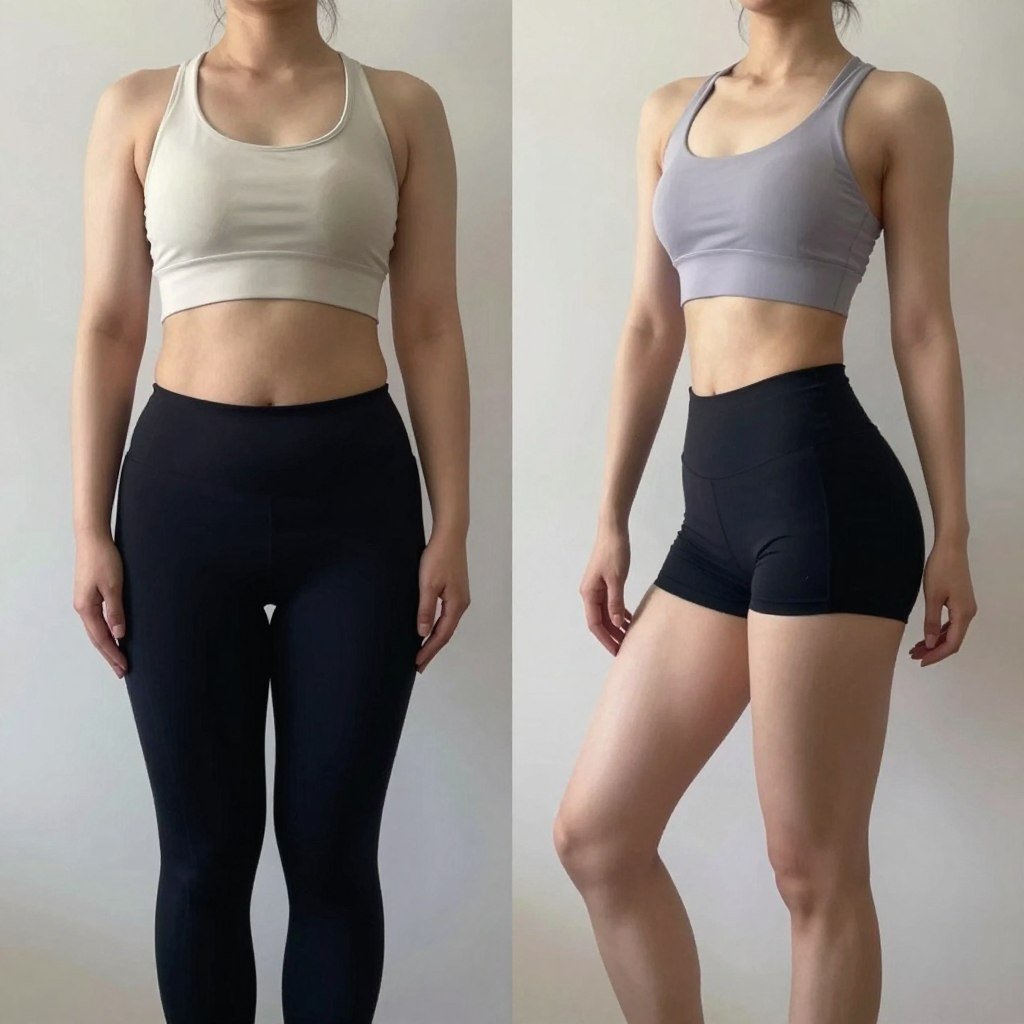
Why muscle matters metabolically: muscle has higher mitochondrial density and burns more calories at rest than fat; plus resistance training improves insulin sensitivity and short-term post-exercise energy expenditure — all of which favor calories going toward muscle over fat.
- How to track SMM sensibly:
- Track SMM (or “skeletal muscle” readings) on your scan and watch trends rather than single values.
- Monitor segmental lean mass (arms/legs/torso) to catch imbalances early.
- Pair scan data with strength metrics (lifting heavier or more reps) and how clothes fit for a fuller picture.
Action step: if scans show low SMM for your body/height and you’re worried about a skinny fat composition, prioritize resistance training and increase daily protein intake — these two levers together best protect and build muscle and improve long-term body composition.
Visceral Fat: The Hidden Danger
Visceral fat surrounds internal organs and is linked to higher risks for heart disease, type 2 diabetes, and metabolic dysfunction. You can look slim and still carry excess visceral fat — another reason the skinny fat pattern is a health concern beyond aesthetics.
Consumer reports often display visceral fat on a 1–20 scale or as levels; a common goal is to keep readings in the lower range (many devices flag Level 1–4 as low). Because devices use different algorithms, track trends over time rather than fixating on a single measurement.
BMR/TDEE: The Real Math Behind Fat Loss
Your Basal Metabolic Rate (BMR) — the calories your body needs at rest — depends heavily on lean mass. Typical BMR estimates for many adult women fall between 1200–1400 calories, but individual values vary with age, height, and muscle mass. Total Daily Energy Expenditure (TDEE) adds your activity and exercise; many active women fall roughly in the 1800–2200 calorie maintenance zone, though muscular or taller women trend higher.
Important caveat: prolonged severe calorie restriction below true needs often accelerates muscle loss, lowers resting metabolic rate, and disrupts hormones, which makes long-term fat loss harder. For recomposition, a modest deficit (about 10–15%) while prioritizing protein and resistance training is usually safer than a drastic cut that sacrifices lean mass.
Quick example: a 60 kg woman with moderate activity might have a BMR near 1300 kcal and a TDEE around 2000 kcal; for recomposition, aim for a small deficit with strong protein intake and resistance training rather than aggressive calorie cuts.
Not Sure Where You Stand?
Get a personalized body composition snapshot and guidance — a clear starting point beats guessing. This quick report helps you see visceral fat, estimated body fat, and suggested next steps based on your metabolic rate and goals.
The 3-Step Skinny Fat Solution (No Starvation Required)
Forget “eat less, run more.” That thinking treats weight as the only metric and ignores where calories actually go in your body. The skinny fat pattern is often a nutrient-partitioning and muscle-preservation issue: unless you give your body the right signals, more calories get stored as fat and less are used to build or maintain muscle. The practical fix is simple and evidence-based — protect and build muscle, meet targeted protein goals, and design daily movement and lifestyle habits that support recomposition.

Jump to: Step 1 — Resistance Training | Step 2 — Protein | Step 3 — NEAT & Lifestyle
Step 1: Resistance Training Is Non-Negotiable
Cardio burns calories while you do it; resistance training changes your composition by building muscle. More muscle raises resting energy expenditure and improves nutrient partitioning so calories are likelier to support muscle mass rather than fat. If you want to stop being skinny fat, you must make strength-focused work a priority.
Aim for at least 2–3 resistance or strength training sessions per week to start, progressing toward 3–4 as you adapt. The principle is progressive overload: systematically increase weight, reps, or sets so muscle grows over time. Light “toning” moves without progressive overload rarely produce the muscle mass change needed to shift composition.
Best Exercises for Body Recomposition:
- Squats — builds lower-body muscle and core stability
- Deadlifts — total-body posterior-chain strength and mass
- Push-ups or chest press — upper-body pushing strength
- Rows — build back muscle and improve posture
- Lunges — single-leg strength, balance, and hypertrophy
The Workout Structure That Works:
- 5–10 minute dynamic warm-up (movement prep)
- 3–4 compound resistance exercises per session
- 8–12 reps per set for hypertrophy-focused work (mix in 6–8 for strength phases)
- 3–4 sets per exercise; increase load when top reps become easy
- 60–90 seconds rest between sets (longer for heavy strength work)

Sample 8-week progression (practical):
- Weeks 1–2: 2 full-body strength workouts/week; prioritize learning form; 2–3 sets of 8–12 reps.
- Weeks 3–5: Move to 3 sessions/week; add a 4th exercise per workout; aim to increase weight every 1–2 weeks when form is solid.
- Weeks 6–8: Emphasize progressive overload — add sets or include lower-rep strength sets (6–8 reps) with heavier loads to boost muscle mass and strength.
Safety & regressions: beginners can use body weight, resistance bands, or light dumbbells while learning bracing, breathing, and joint alignment. If you’re unsure about form, seek a coach or start with slower tempos and fewer reps until movement quality is consistent.
About afterburn: resistance training raises post-exercise oxygen consumption (EPOC), but the primary long-term benefit for recomposition is increased muscle mass and improved insulin sensitivity — not a giant calorie afterburn. Prioritize consistency in strength training plus adequate protein to change composition.
Quick micro-FAQ: Will lifting make me bulky?
No — most women have much lower testosterone than men and won’t develop large, bulky muscles unintentionally. Resistance training produces a stronger, more defined look and increases metabolic power. Significant mass gain requires highly specific, high-calorie training and nutrition that most recreational lifters don’t follow.
How this helps a skinny fat body: progressive resistance training preserves and builds muscle, shifts weight changes toward fat loss rather than lean loss, and increases daily energy needs over time — which reduces the soft, undefined look associated with being skinny fat.
Step 2: Protein Is King
You can’t build or reliably preserve muscle without enough protein. For body recomposition, many women benefit from a target near 1.5–2.0 g per kg of body weight per day — a practical range used for maintaining and growing muscle while dieting. Higher intake within this range helps protect lean mass during a calorie deficit and supports recovery after resistance training.
Example: a 60 kg woman aiming to improve composition should target roughly 90–120 g of protein daily. Hitting these targets makes it likelier that calories support muscle instead of fat — a core strategy to escape the skinny fat body.
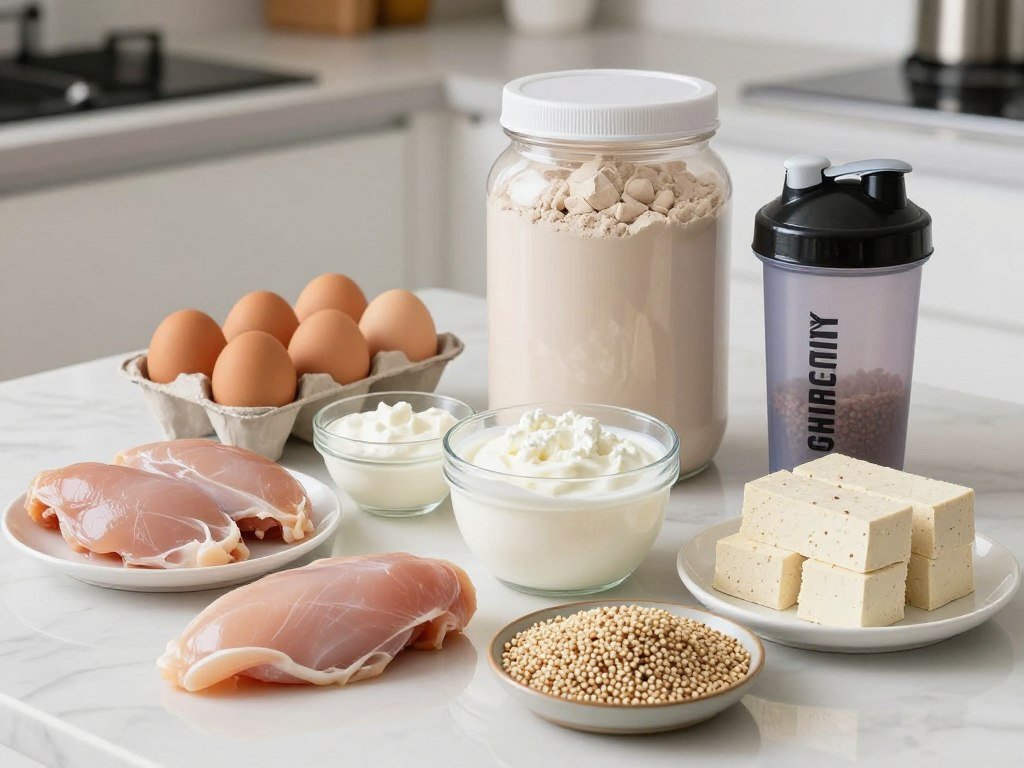
Protein Intake Calculations — quick examples
- 50 kg × 1.5 g/kg = 75 g protein/day
- 60 kg × 1.5–2.0 g/kg = 90–120 g protein/day
- 70 kg × 1.5–2.0 g/kg = 105–140 g protein/day
Adjust based on training intensity, age, and whether you’re cutting (aim for the higher end when in a deficit).
Top Protein Sources (approx. protein per serving)
- Chicken breast — ~25–30 g
- Greek yogurt — ~15–20 g per cup
- Eggs — ~6 g each
- Cottage cheese — ~20–25 g per cup
- Whey or plant protein — ~20–25 g per scoop
Protein Timing & Practical Tips
- Spread protein across the day — aim for 20–40 g per meal or snack to maximize muscle protein synthesis.
- Consume ~20–30 g within an hour after workouts to support recovery and muscle growth.
- A small protein serving before bed (casein, cottage cheese) supports overnight repair.
- Protein at breakfast helps control appetite and maintain energy through the day.
Vegetarian & vegan options: combine lentils, chickpeas, tofu, tempeh, seitan, or concentrated plant protein powders to meet essential amino acid needs. If you’re short on time, a third-party-tested protein powder can be a practical tool.
Choosing a Supplement — quick criteria
- Check grams of protein per scoop (aim for 20+ g).
- Prefer third-party testing (NSF, Informed-Sport) for quality assurance.
- Watch added sugars and artificial ingredients if you prioritize whole-food nutrients.
Struggling to Hit Your Protein Goals?
Eating 90–120 g of protein a day can be tough with a busy schedule. A reliable protein powder or high-protein snack makes it easier while you focus on strength training.
This High-Quality Protein Supplement Keeps Me Full and Fueled
Why protein matters: combined with progressive resistance training, consistent protein intake is the clearest dietary lever to increase muscle mass, protect lean tissue during calorie changes, and shift composition toward more muscle and less fat. Pair protein with whole-food nutrients and reduced added sugar for best results.
Step 3: NEAT and Lifestyle Design
NEAT (Non-Exercise Activity Thermogenesis) is the sum of all daily movement outside formal workouts — walking between meetings, taking stairs, standing, household chores, and fidgeting. These small behaviors add up and significantly affect daily energy balance and nutrient partitioning, helping you lose fat while protecting muscle.
NEAT can add an extra ~300–800 calories per day depending on job and baseline activity. Instead of chasing massive gym sessions, increase movement in ways that fit your life: a practical target for many is 8,000–10,000 steps/day, but shorter walks, active breaks, or standing work also boost NEAT effectively.

NEAT hacks (easy ways to add movement)
- Take 5–10 minute walking or mobility breaks every hour while working.
- Use a sit-stand desk for part of the day; alternate standing and sitting in 20–40 minute blocks.
- Walk meetings or phone calls when possible.
- Park farther away, take stairs, carry groceries in multiple trips, or pace while on calls.
- Set a daily step goal and add a short post-dinner walk — consistent small habits beat sporadic long workouts for NEAT gains.
The “One Fist” Carb Rule — practical plate guidance
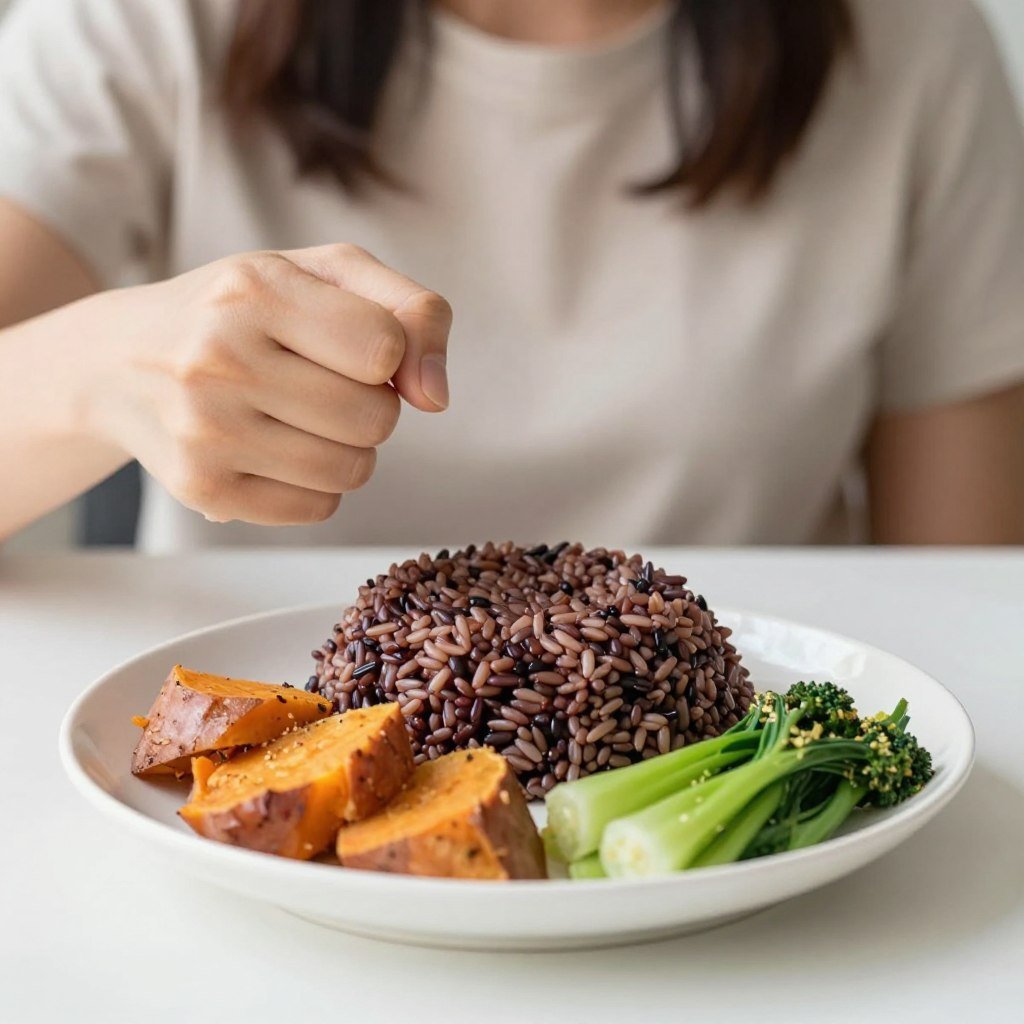
Carbs aren’t the enemy — quality and portion size matter. Use your fist as a portion tool: one fist-sized serving of starchy carbs (sweet potato, brown rice, quinoa, starchy veg, fruit) per meal, paired with a palm-sized protein and plenty of non-starchy vegetables. Adjust portions slightly for higher- or lower-calorie goals, but focus on protein and whole-food nutrients over added sugar.
Sleep, insulin sensitivity and other lifestyle levers
Poor sleep and chronic stress worsen insulin sensitivity and promote visceral fat storage. Aim for 7–9 hours nightly, limit late-night sugar and alcohol, and keep consistent meal timing to support hormonal balance. Better sleep and lower daily stress make it easier to build and hold muscle while losing fat.
Sample weekly schedule (how to balance NEAT and workouts)
- Mon: Strength workout (full body) + 20–30 min walk post-dinner
- Tue: Active day — 8k steps goal, mobility work, standing desk
- Wed: Strength workout + short NEAT breaks throughout the day
- Thu: Active recovery — yoga or long walk, step goal
- Fri: Strength workout + 15–20 min walk
- Sat: Longer activity — hike, bike ride, or active social plans
- Sun: Rest or light movement — mobility and family walk
Small, consistent lifestyle changes — more NEAT, better sleep, improved dietary quality (protein and whole-food nutrients over added sugar) — are the final piece that turns training and nutrition into lasting body composition changes. These everyday habits change how your body stores fat and builds muscle, which is the real escape from being skinny fat.
Want a simple home setup to support NEAT and strength training?
No gym? No problem — combine short strength sessions with daily movement for fast wins. A few basic tools can make home workouts effective and keep you moving all day.
The Verdict: Eat Smarter, Move Better
The bottom line: fixing a skinny fat body isn’t about eating less — it’s about eating and moving smarter so calories help build and preserve muscle instead of fueling excess fat. Prioritize strength training, hit targeted protein goals, and boost daily movement to change your composition, not just your weight.
You don’t have a weight problem. You have a body composition problem. And that requires a completely different approach.
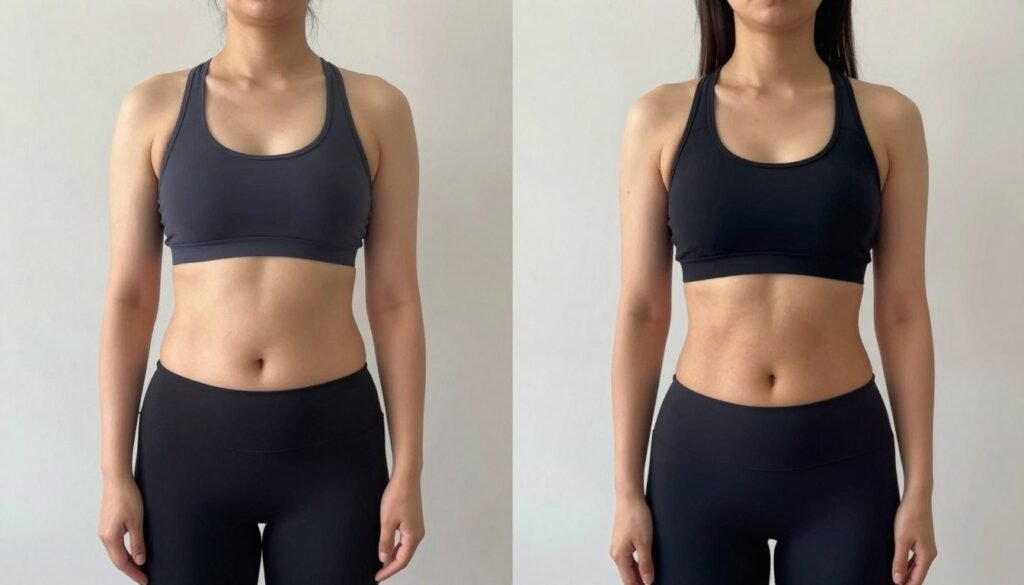
I’ve helped many people move from a soft, undefined look to a stronger, leaner body by following consistent principles rather than fads. They stop obsessing over scale weight and start tracking composition, strength gains, and daily energy. Over weeks and months their clothes fit better, strength increases, and muscle mass rises while fat falls.
How to start today — 3 quick actions
- Measure composition: get an InBody or DEXA scan (or at minimum take tape measurements and progress photos) so you know your true starting point.
- Schedule strength: book 2–3 weekly resistance sessions this month and commit to progressive overload — treat them like non-negotiable appointments.
- Hit protein targets: calculate ~1.5–2 g/kg protein per day and spread intake across meals to protect muscle mass and recovery.
Expected timeline (estimates): many people notice improved energy and sleep in 1–2 weeks, visible changes in 4–6 weeks, and meaningful recomposition in 8–12 weeks with consistent training and diet. Individual results vary based on starting composition, adherence, and lifestyle factors — keep measuring composition and strength rather than relying solely on the scale.
Safety note: if you have medical conditions, are pregnant, or have special dietary needs, consult a healthcare provider before making major changes to diet or training.
Ready to Transform from “Soft” to “Sculpted”?
Stop guessing — follow a structured plan built for people dealing with skinny fat composition. A focused program that combines resistance workouts, protein guidance, and lifestyle adjustments accelerates progress and protects metabolic health.
Frequently Asked Questions About Skinny Fat
Can I lose skinny fat without lifting weights?
Technically yes, but it’s usually slower and less reliable. Challenging bodyweight exercises (push-ups, squats, single-leg variations, planks) can improve strength and body composition, but progressive resistance training with external load is the most direct way to increase muscle mass. If you avoid weighted lifts, prioritize progressive overload through harder variations, increased volume, or tempo changes — and keep protein high to support muscle retention.
Should I cut calories to lose the fat first?
Large, rapid calorie cuts often backfire for people with a skinny fat body because they can accelerate muscle loss. Aim for a modest deficit (~10–15%) if fat loss is the goal, but pair it with resistance training and adequate protein to protect lean mass. Think in terms of body composition (muscle vs. fat) rather than just scale weight.
How long will it take to see results?
Timelines vary based on starting composition, training history, and consistency. Many people feel improvements in energy and sleep within 1–2 weeks, notice visible changes in 4–6 weeks, and see meaningful recomposition in 8–12 weeks. These are estimates — track composition scans, measurements, progress photos, and strength gains rather than relying solely on the scale.
Will I get bulky from lifting weights?
Almost certainly not. Women typically have much lower testosterone than men, which makes accidental extreme hypertrophy unlikely. Strength training usually yields a firmer, more defined physique and improved functional strength. Large muscle mass gains require very specific high-volume training and calorie surpluses that most recreational trainees don’t follow.
Can I do this if I’m a beginner?
Absolutely. Beginners often see the fastest relative gains in muscle and strength. Start with lighter loads or bodyweight patterns to learn form, focus on basic compound movements, and progress gradually. Consistency and progressive overload matter far more than beginning heavy — and early coaching or a short review session can speed safe progress.
Can a keto diet help fix skinny fat?
Keto can reduce overall body fat for some people, but it’s not a standalone fix for skinny fat. The core priorities remain resistance training and sufficient protein to build or preserve muscle mass. If you follow keto, ensure you still meet protein targets and maintain strength training; otherwise you risk losing lean mass and not improving composition.
How much protein should I eat at night?
A moderate protein serving before bed (about 20–40 g, e.g., cottage cheese or casein-rich foods) can support overnight muscle repair. More important is your total daily protein intake and spreading it across meals to maximize muscle protein synthesis throughout the day.
Will cardio remove visceral fat?
Cardio helps reduce overall body fat and can contribute to lowering visceral fat, but the best health and composition outcomes come from combining cardio with resistance training, higher protein intake, and better dietary quality (fewer added sugars). NEAT and sleep also influence visceral fat and metabolic health.
How should I measure progress besides the scale?
Use multiple measures: body composition scans (DEXA/InBody) or tape measurements, consistent progress photos, strength improvements (lifting heavier or more reps), and how your clothes fit. Track sleep and daily energy too — they’re useful signals that your metabolic health and composition are improving.
Your Skinny Fat Transformation Starts Now
Remember: the scale is only one data point and can be misleading. Your best indicators of real progress are body composition, daily energy, strength, sleep quality, and how your clothes fit — especially when your goal is to change a skinny fat or soft fat body type into a stronger, leaner one.
Don’t rely on endless cardio or extreme calorie restriction as your primary strategy — those approaches can erode muscle mass and harm long-term metabolic health. Instead, follow an evidence-based way: protect and build muscle with consistent strength training, prioritize protein and quality nutrients, improve sleep and recovery, and add daily movement. These lifestyle changes improve resting metabolic rate, shift where your body stores fat, and produce lasting health and aesthetic benefits.
3 quick starter steps (do these this week)
- Measure your starting point: get a body composition scan (InBody/DEXA) or at minimum take tape measurements and standardized progress photos so you can track real composition changes over time.
- Schedule strength sessions: book 2–3 resistance workouts this week and treat them like appointments — progressive resistance is the fastest way to grow muscle mass and change composition.
- Set a protein target: calculate ~1.5–2 g/kg protein per day and spread intake across meals to support muscle repair, recovery, and satiety.
Small, consistent changes compound. Make these three moves this week and you’ll be building the daily habits that turn a soft, undefined physique into a stronger, leaner one over the coming weeks and months.
If you want a printable one-page starter checklist, a short quiz, or an 8-week sample plan to follow, take the quick quiz to get personalized suggestions and a downloadable starter checklist. Share progress photos or short updates to stay accountable and get coaching feedback.
Safety note: if you have underlying medical conditions, are pregnant, or have special dietary needs, check with your healthcare provider before making major changes to diet or exercise. For most people, focusing on measureable composition metrics, consistent strength training, better dietary quality, and improved sleep (7–9 hours) creates the sustainable foundation for long-term health and body recomposition.
Be consistent, be patient, and focus on the process: measure, train, nourish, move every day. That’s the real Skinny Fat Survival Guide — the practical route to becoming a stronger, healthier version of yourself.